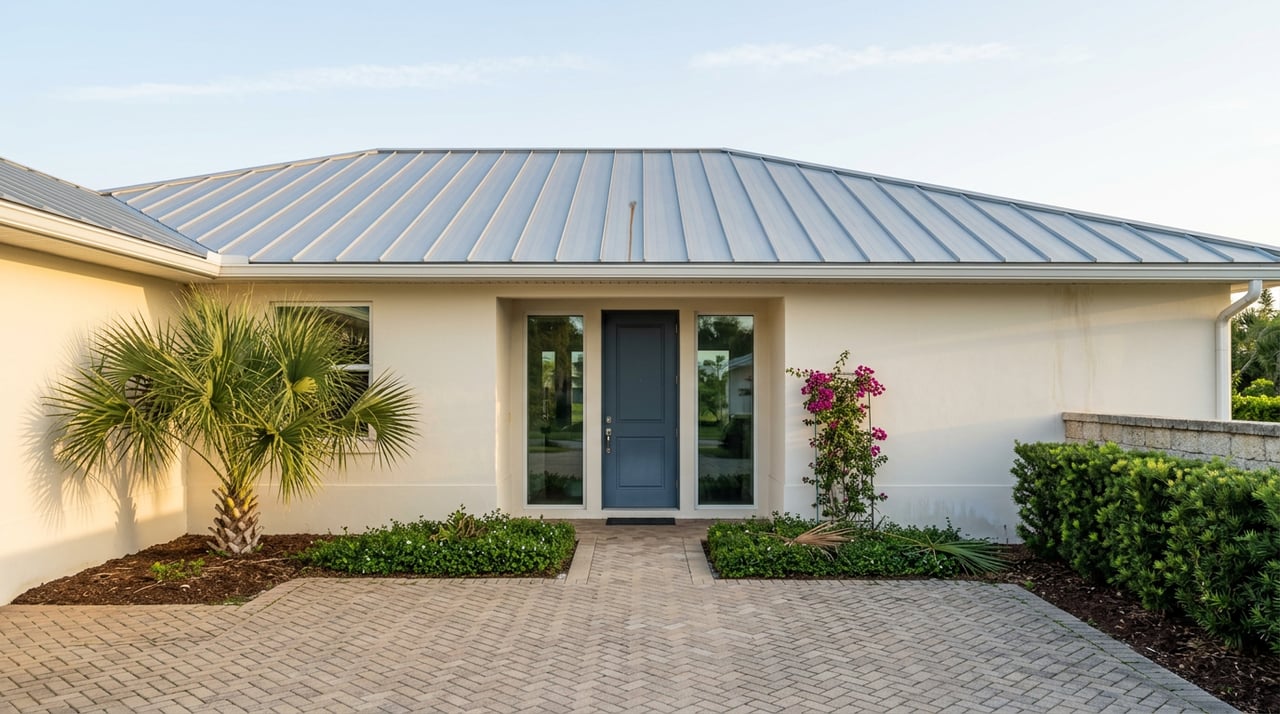
On Siesta Key, the Beach Doesn't Decide Your Rental Rights. A Property Line Does.
September 3, 2026
September 3, 2026
Two homes on Siesta Key can sit three streets apart, both a five-minute walk from the sand, and only one of them can legally take a weekend guest. The other has to rent for a month at a time or not at all. Nothing about the house, the block, or the water view predicts which one you're standing in front of. The zoning designation underneath the house does.
That single fact catches more investment buyers off guard on Siesta Key than any other detail in the transaction. Listings describe "turnkey vacation rental" and "great Airbnb potential" all over the island, and plenty of those descriptions are accurate. Just as many are aspirational. The difference has nothing to do with the house itself.
One line on a zoning map decides more about rental income than granite countertops ever will.
Siesta Key sits inside two separate governments. Part of the island falls within the City of Sarasota. The rest sits in unincorporated Sarasota County. The two run entirely different vacation rental frameworks, and the boundary between them cuts across the island rather than around it, so neighboring parcels can answer to different rulebooks entirely.
The City of Sarasota updated its approach in 2025. Ordinance 25-5560, adopted that July and fully in force for 2026, allows short-term rentals in qualifying residential zones on a seven-night minimum stay, provided the owner holds a current Vacation Rental Certificate of Registration. Getting that certificate means annual renewal, a physical safety inspection before issuance and before every renewal, a designated responsible party who can be on-site within an hour at any time of day or night, and compliance with occupancy limits, on-site parking, and safety equipment.
Sarasota County takes the opposite position for most of the island. In unincorporated areas, the general rule is a 30-day minimum lease for single-family zoned property, and that covers the bulk of Siesta Key along with Casey Key and Manasota Key. An owner in one of these zones cannot legally book a weekend guest no matter how the listing reads online.
There is one carve-out. Parcels zoned Residential Multi-Family on the barrier islands, including sections of Siesta Key, can operate under the shorter stay rules with proper licensing. That zoning designation, not distance to the beach, is the entire ballgame for anyone counting on nightly income.
The 2026 version of the city ordinance is specific, and the specificity is the point. A property operating under city rules needs:
Skip any one of those and the exposure isn't hypothetical. Operating without a current certificate can bring fines, suspension, or a cease-and-operate order from the city.
| City of Sarasota | Unincorporated Sarasota County | |
|---|---|---|
| Minimum stay | 7 nights | 30 days in single-family zones |
| Short-term exception | Any qualifying residential zone with certificate | RMF-zoned parcels on barrier islands only |
| Core requirement | Certificate of Registration, annual inspection | State DBPR license, TDT registration |
| Governing update | Ordinance 25-5560, adopted July 2025 | Standing county zoning code |
Inside unincorporated Sarasota County, the paperwork changes shape but doesn't disappear. Any short-term rental still needs a state DBPR license for stays under six months, along with registration for the county's Tourist Development Tax. The catch for most Siesta Key buyers is that none of that paperwork matters if the parcel is zoned single-family, because the 30-day minimum applies regardless of licensing.
The island also carries its own overlay, the Siesta Key Overlay District, layered on top of standard county zoning. SKOD affects parking ratios, allows alternative parking surfaces, sets landscaping and buffering standards, and can limit certain events on a property. None of that changes whether a rental is legal, but it shapes what compliance looks like for an owner who does qualify.
Short-term rental income on Siesta Key carries a combined tax burden of roughly 13 percent as of 2026, once the county's 6 percent Tourist Development Tax stacks on top of state sales tax. Platforms like Airbnb collect and remit some of that automatically, but the host stays responsible for confirming registration and filing wherever a booking happens outside the platform's own tax agreements. It's a manageable cost of doing business, but it belongs in the pro forma before the offer, not in the first tax filing.
Investment figures circulating earlier this year for the broader Sarasota vacation rental market put average annual revenue per active listing somewhere between $41,000 and $45,000, with occupancy climbing into the high 80s during February and nightly rates ranging from around $219 in the off-season to $386 at the winter peak. Siesta Key was named as one of the locations outperforming that market average, alongside Longboat Key and downtown Sarasota, which makes the zoning question even more consequential. Those numbers describe a market that rewards the properties legally positioned to compete in it and does nothing for the ones that aren't.
Even a parcel that clears both the city and county tests can still run into a wall zoning never mentions: the condo or homeowners association. Declarations and bylaws routinely set stricter limits than either government requires, from minimum lease terms to an outright annual cap on rentals to board approval for every tenant. An association can enforce a rule tighter than the city's seven nights or the county's thirty days, and that rule wins.
Timing matters here too. Rental restrictions an association adopts after a unit is purchased typically bind future owners from the amendment date forward, while an existing owner who never consented may retain different rights. That distinction has decided more than one closing on the island, which is why pulling the actual governing documents, not a summary of them, belongs on the due diligence list before the offer goes in rather than after.
Confirm these before assuming a Siesta Key property can operate as a short-term rental:
None of this shows up cleanly on a listing sheet. It shows up in a zoning map, a set of governing documents, and a call to the right department. The Coalition of City Neighborhood Associations keeps a plain-language breakdown of the city and county rules that's worth reading before you assume anything.
Does living in the home part-time change anything? Occupancy status can matter in some jurisdictions, but it doesn't override the underlying zoning or the minimum stay length. Confirm both before assuming an owner-occupied exception applies to your situation.
Can an HOA say no even if the city or county says yes? Yes. Association documents can set stricter terms than either government requires, including an outright ban on short-term rentals regardless of zoning.
What if I'm fine with a 30-day minimum? Then the county's single-family zoning restriction stops being a problem, and a much wider slice of Siesta Key opens up. The month-plus rental market on the island is real and less crowded than the nightly-stay conversation suggests.
Buying on Siesta Key for rental income is still a sound strategy for the right property in the right zone. The mistake isn't wanting that income. It's assuming the water view guarantees it. Jessica Ross works this island block by block, not listing by listing, and can tell you before you write an offer whether the parcel you're looking at actually clears the rules you're counting on. Schedule a free market consultation before your next offer, not after.
Stay up to date on the latest real estate trends.

Searching for your dream home in the Sunshine State? Look no further! Jessica Ross is your dedicated Florida real estate expert, ready to guide you on an exciting journey towards finding the perfect property.